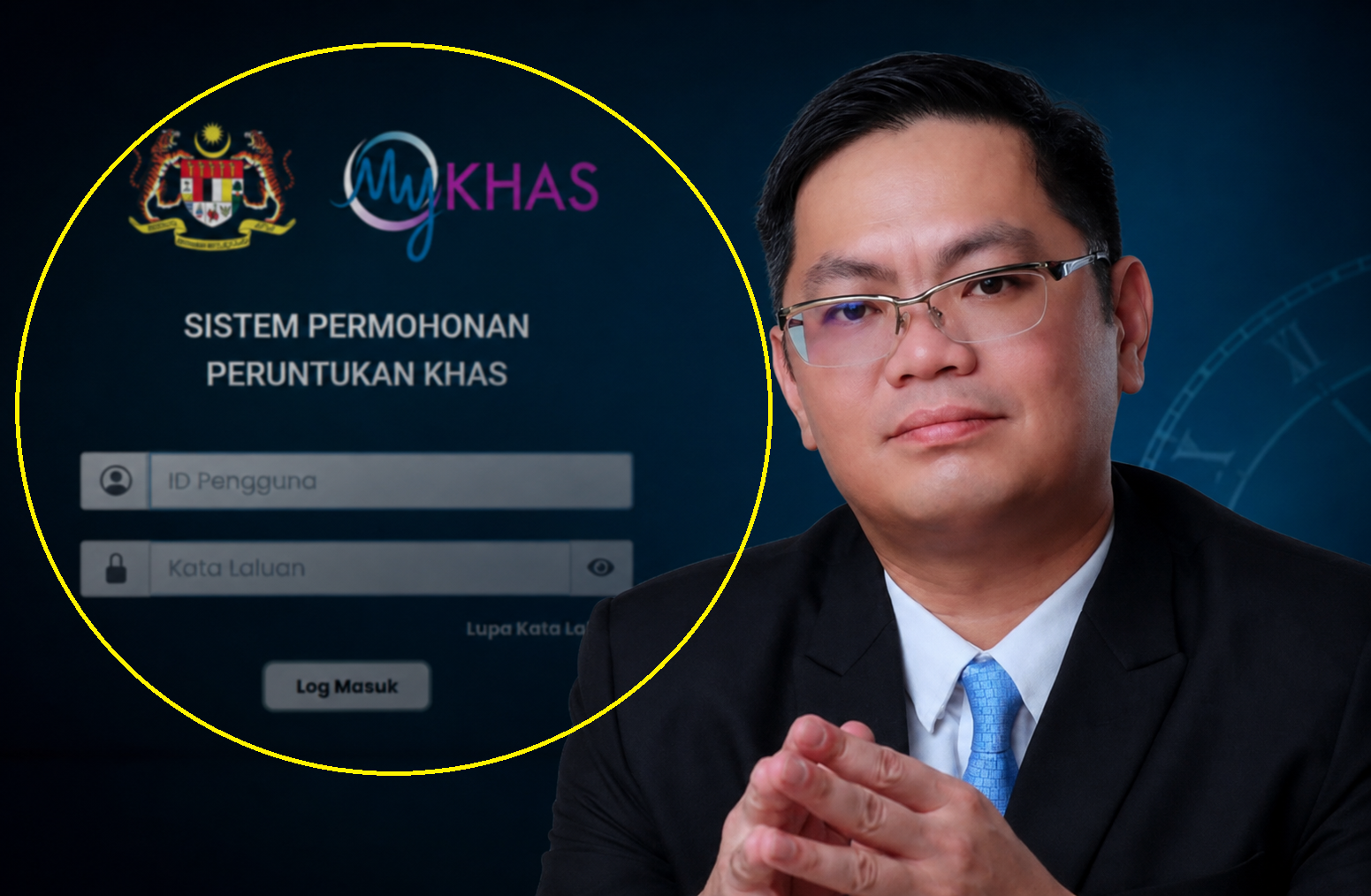
KUALA LUMPUR — BERSATU Puchong Division Associate Wing chief Dato’ Gan Yong Hwa said the restriction imposed on certain Members of Parliament’s offices from using the MyKHAS system to process constituency allocations and applications for people-oriented programmes had raised concerns over whether the Unity Government was linking public administrative systems and public resources to an MP’s political position and loyalty to the government.
He said MyKHAS is administered by the Implementation Coordination Unit under the Prime Minister’s Department and covers projects involving schools, places of worship, vulnerable groups, community facilities and local development.
The system involves national resources and taxpayers’ money, he said, and is not the private property of the Prime Minister, any minister or any ruling party.
“If an MP is denied access to a government administrative system simply because of a different political position, criticism of the government or engagement with another political platform, the person affected is not merely the politician concerned. The real victims are the constituents waiting for assistance, allocations and community development.”
Gan was commenting on the restriction imposed on MP Lee Chean Chung’s office from accessing the MyKHAS system.
He said the government must publicly disclose the official reasons, assessment criteria and appeal procedures governing any restriction placed on an MP’s office.
The government cannot cut off an administrative channel used by elected representatives to manage constituency affairs without providing a transparent explanation, he said.
“The issue is not merely whether the allocation is eventually approved or disbursed. The real question is whether the government can exclude representatives elected by the people from participating in constituency affairs without prior notice, written reasons and a transparent process.”
Gan stressed that elected representatives, regardless of whether they are from the government, the opposition or are independent, and irrespective of their political beliefs, are representatives who have received a mandate from the electorate.
The administration may monitor how allocations are used, strengthen auditing procedures and reject applications that do not meet the stipulated requirements. However, political loyalty must never be used as the standard for determining access to government systems or the distribution of public resources.
“The government should put the people first instead of turning public services into rewards available only to those who support it.
“A political party may enforce its internal discipline, but party discipline must not be extended into administrative punishment, much less be used to indirectly punish constituents by restricting their access to public resources.”
Gan said that if public allocations truly belonged to the people, no leader should be allowed to decide who may submit applications and who must be excluded based solely on personal judgement or political preference.
He said healthy politics was not complicated. The key questions were whether the same rules applied fairly to everyone, whether every decision had a written basis and whether the government was prepared to accept scrutiny from the public and Parliament.
“People judge politics not only by who is in power, but also by whether the same rules are applied fairly. Today, the government may restrict an MP because of his political position. Tomorrow, the same method could be used against anyone who criticises the government or refuses to remain silent.”
Gan said that to prevent MyKHAS from becoming an instrument of political control, the government must publish uniform eligibility requirements, conditions under which restrictions may be imposed and procedures for restoring access for all MPs’ offices.
Any decision to suspend or revoke access must be accompanied by formal written reasons and a fair, clearly defined and time-bound appeal mechanism, he said.
The government should also periodically publish information on applications and allocations approved through MyKHAS, including the constituencies involved, project categories, approved amounts and reasons for rejecting applications.
He said this was necessary to demonstrate that public resources were distributed according to the people’s needs and objective criteria, rather than the political position of an elected representative.
Gan said Prime Minister Datuk Seri Anwar Ibrahim had long advocated fair allocations, institutional reform and an end to selective treatment while he was in the opposition.
Having become Prime Minister, Anwar now bears an even greater responsibility to demonstrate through action that reform principles do not change according to one’s political position.
“If there are genuine administrative or legal grounds for the restriction, the government must explain them publicly and allow the affected party to appeal. If the government cannot provide clear, consistent and verifiable grounds, access should be restored immediately.”
Gan said genuine reform did not mean demanding loyalty to the government from everyone. Genuine reform meant exercising power fairly, following established rules and ensuring that people were not denied the resources to which they were entitled merely because their elected representative held a different position from the government.
“MyKHAS belongs to the people. It does not belong to the Prime Minister, nor is it a tool for any political party to reward its allies or punish dissenters.
“If the government cannot distribute public resources fairly, it has no right to continue presenting itself as a reformist government.”