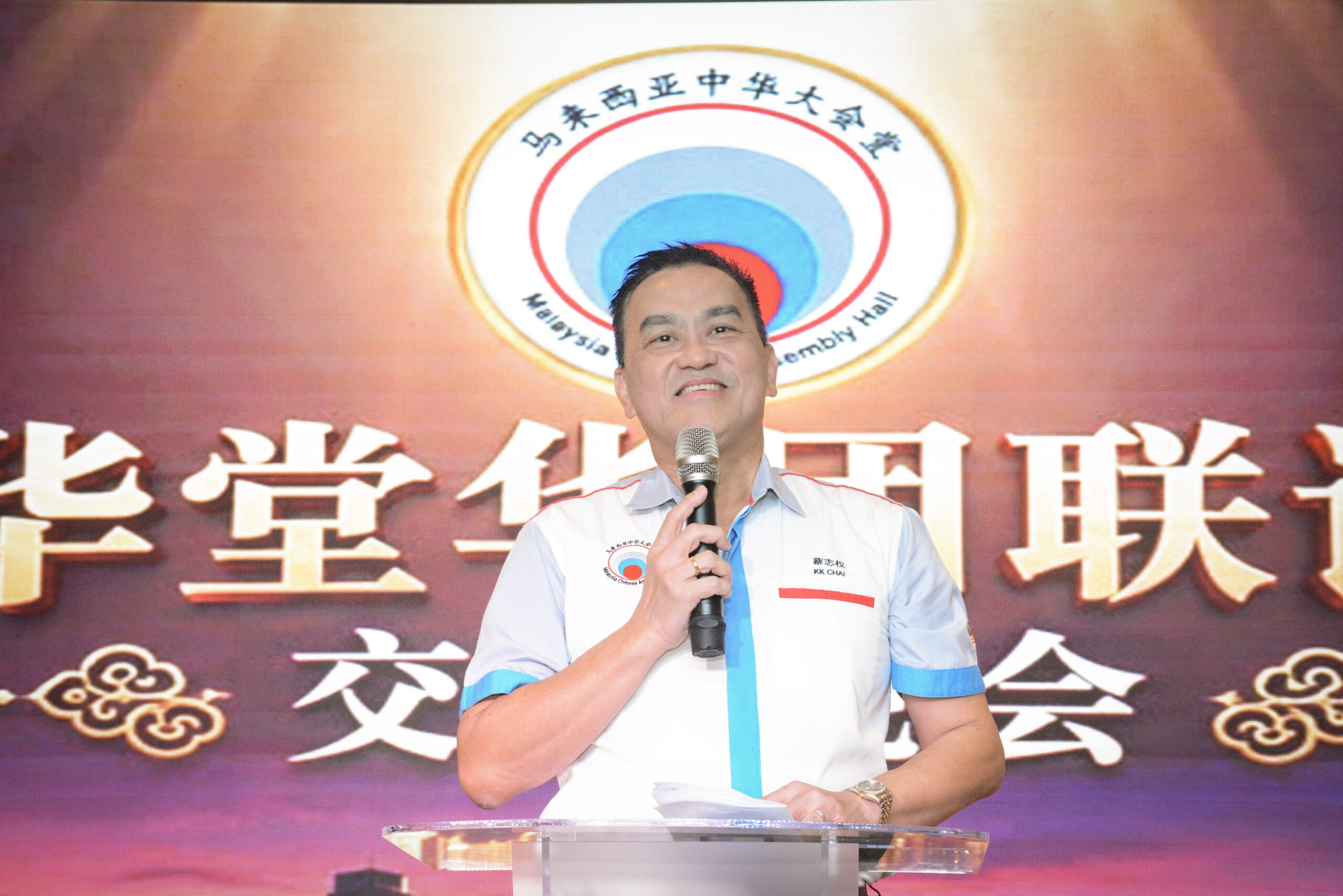
KUALA LUMPUR: The Malaysia Chinese Assembly Hall (MCAH) successfully brought together leaders from more than 152 Chinese associations across the country at its Chinese Associations Networking Evening, demonstrating the strong spirit of unity within the Chinese community while providing an important platform for networking, dialogue and collaboration among organisations from diverse sectors.
Participating organisations represented a wide range of fields, including commerce, industry, culture, education, media, professional bodies, clan and hometown associations, youth organisations and charitable institutions. In addition to MCAH’s affiliated members, the event also welcomed representatives from other invited Chinese associations.
MCAH President **Datuk Seri Dr KK Chai** said cooperation among Chinese associations should go beyond official correspondence, festive greetings and occasional courtesy visits. Instead, organisations should develop closer relationships and pursue meaningful partnerships that deliver tangible results.
He expressed his appreciation to **Yuan Hui Shan**, Chairman of MCAH’s Chinese Associations Liaison Committee, and the entire organising committee for their efforts in reaching out to various associations and creating an opportunity for community leaders to strengthen relationships and exchange ideas.
**“Genuine cooperation among Chinese associations means staying connected, being able to discuss matters when issues arise, supporting one another through difficulties, and working together whenever opportunities emerge. This is the true purpose of our networking evening.”**
Chai said Malaysia’s Chinese community comprises numerous associations with different histories, objectives and areas of expertise. By strengthening their connections and pooling resources, these organisations could collectively make a far greater contribution to society.
He made these remarks while addressing the MCAH Chinese Associations Networking Evening.
Chai stressed that the value of an association should not be measured solely by the size of its membership, but by how much it contributes to its members, how effectively it addresses community concerns, and the meaningful benefits it brings to the nation.
He noted that changing economic conditions, rising business operating pressures, labour shortages and policy adjustments have made it increasingly important for Chinese associations to play a proactive role in representing their members’ needs and contributing constructively to public policy discussions.
Chai revealed that MCAH had met with **Human Resources Minister Datuk Seri R. Ramanan** on October 16 to directly convey concerns raised by the Chinese community and business sector regarding human resources and labour policies.
**“When formulating policies, the government must listen to the views of different segments of society, particularly businesses and entrepreneurs who bear operating costs and create employment opportunities for the people.”**
He also urged Chinese associations and MCAH’s affiliated organisations to take a more active role in submitting feedback and proposals to the Assembly Hall.
Whether the issues concern education, culture, labour, the economy, business, taxation or social welfare, Chai said MCAH stands ready to serve as a communication bridge between the community and the relevant government authorities, particularly on matters affecting community interests and national development.
Turning to cultural activities, Chai highlighted MCAH’s successful organisation of the **2026 National Mid-Autumn Festival Carnival**, one of its flagship annual cultural events.
The celebration brought together traditional Chinese heritage and Malaysia’s multicultural identity, while further enhancing Petaling Street’s appeal as a cultural and tourism destination.
He said the festival, held at Petaling Street in Kuala Lumpur, was attended by **Minister of Tourism, Arts and Culture Datuk Seri Tiong King Sing**, as well as more than 10 foreign diplomats and diplomatic representatives, including representatives from the Chinese and United States embassies.
Their participation provided an opportunity for international guests to experience traditional Chinese festivities while appreciating the diversity and harmony of Malaysian society.
Chai said individual associations inevitably face limitations in resources and reach. However, when hundreds of organisations combine their networks, expertise and manpower, they can organise larger initiatives and generate far greater social impact.
He emphasised that Chinese associations must seriously reconsider their future direction and move beyond traditional operating models, rather than continuing to work in isolation and missing opportunities to share resources and expand their collective influence.
According to Chai, changes in society, technological advancements and evolving patterns of participation among younger generations require Chinese associations to remain relevant by continuously adapting and redefining their roles.
**“In the past, every association organised its own activities and carried out its own work. Everyone has worked hard, but by combining our resources and expertise, we can achieve much greater results with the same collective effort.”**
He proposed stronger cross-sector collaboration, including partnerships between cultural and tourism organisations to promote cultural tourism, cooperation between educational bodies and business associations to develop talent, collaboration between professional organisations and youth groups to encourage innovation, and partnerships between charitable institutions and the corporate sector to assist vulnerable communities.
**“When Chinese education faces challenges, we should stand together in concern. When businesses encounter difficulties, we should jointly raise their concerns. When society needs help, we should be ready to extend a helping hand. This is the true spirit of Chinese associations.”**
Chai said unity among Chinese associations should not be pursued merely to safeguard existing organisations, but also to ensure that future generations inherit stronger community networks, a more resilient cultural foundation and broader opportunities for advancement.
**“How far an association can go is not determined simply by how many members it has today, but by what we are able to leave behind for the next generation.”**
He called on Chinese associations nationwide to uphold the spirit of solidarity, mutual assistance, openness and practical cooperation, while breaking down barriers between organisations to face the challenges of a new era together.
**“The strength of Chinese associations does not lie in how powerful each organisation is on its own, but in how much value we can create for society when we stand united.”**